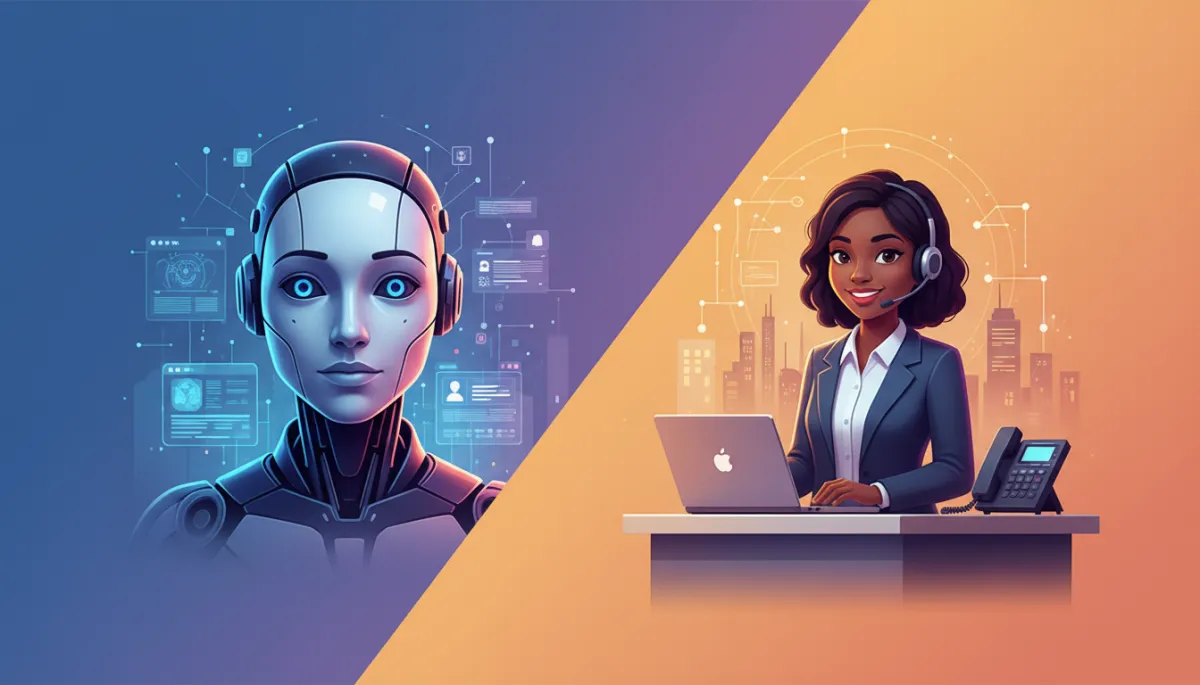
AI vs Traditional Receptionist: Key Differences
AI Receptionist, Virtual Receptionist Comparison, Local Business Growth
AI Receptionist vs Traditional Receptionist: What’s the Difference?
On a rainy Tuesday morning in a small downtown strip, two local business owners stared at the same problem from opposite sides of Main Street. One relied on a familiar face behind the desk; the other had just handed the front-line duties to an invisible assistant living in the cloud. Their shared question—AI Receptionist vs traditional receptionist: what’s really the difference?—would quietly shape the future of both businesses more than they imagined.
Two Front Desks, One Street: A Tale of Two Receptionists
On one side of Main Street sat Harbor Dental Studio, where Linda, the traditional receptionist, had greeted patients for nearly a decade. She knew every regular by name, remembered which kids were afraid of the drill, and kept a handwritten list of who needed a reminder call. Her desk was a collage of sticky notes, appointment cards, and a perpetually blinking phone line.
Directly across the street, a newer business—Blue Harbor Physical Therapy—had a different story. After months of missed calls and overworked staff, the owner, Marcus, made a decision that raised a few eyebrows: he replaced the idea of a full-time receptionist with an AI receptionist that answered calls, booked appointments, and even handled basic FAQs 24/7. No front-desk chair, no candy bowl, just a clean counter and a small sign: “We’re always available—call, text, or chat anytime.”
💬 Story Moment: When a new patient called Marcus’s clinic at 9:47 p.m. on a Sunday, the AI receptionist answered on the first ring. Across the street, Linda’s phone sat in the dark, voicemail light blinking softly, waiting for Monday.
Defining the Difference: Human vs AI at the Front Desk
To understand AI Receptionist vs traditional receptionist, it helps to step back and look at what the front desk really does. Every day, your receptionist—whether human or digital—handles four critical jobs:
Answering and routing calls so opportunities aren’t lost to voicemail
Booking, changing, and confirming appointments with accuracy and speed
Greeting visitors and shaping that crucial first impression of your brand
Handling simple questions so your team can focus on deeper work
A traditional receptionist does all of this in person, with a human touch—but also with human limitations. They need breaks. They clock out at 5. They can only handle one conversation at a time. A well-trained AI receptionist, like those described in this deep dive into the future of the front desk, takes those same tasks and automates them, often across phone, SMS, and web chat, without the constraints of time or attention span.
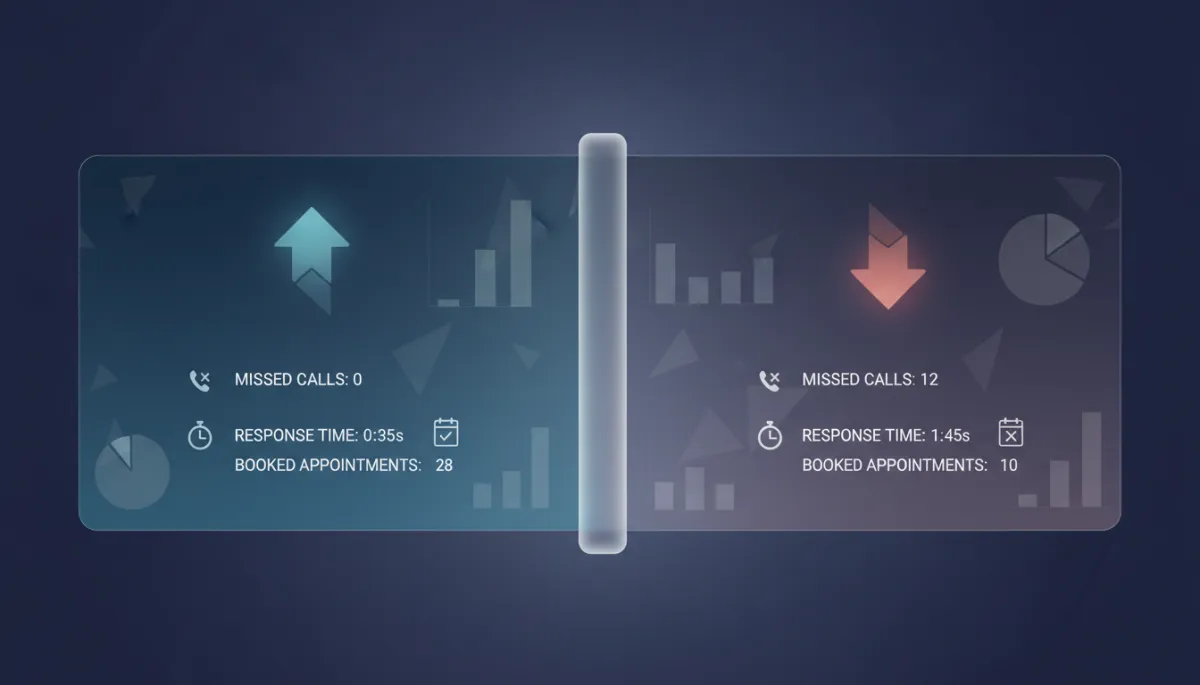
A clear virtual receptionist comparison often reveals hidden costs of missed calls and slow responses.
Virtual Receptionist Comparison: How AI Changes the Numbers
When Marcus first considered an AI solution, he didn’t start with technology. He started with a notebook. For two weeks, he tracked every missed call, every voicemail, every double-booked slot. What he discovered looked a lot like what industry studies have shown: small businesses can lose a surprising amount of revenue simply because nobody picks up the phone. According to research cited by Forbes on the cost of not answering calls, many customers won’t call back a second time—they just move on to the next business.
In a virtual receptionist comparison, the numbers often tell a simple story:
AI receptionists can answer every call—no busy signals, no “I’ll call them back later” pileups.
They respond instantly, which matters when a potential customer is also looking at your competitors’ phone numbers.
They integrate with calendars and CRMs, cutting down on double-booking and manual data entry.
💡 Story Detail: After switching to an AI receptionist, Marcus saw his missed calls drop to nearly zero within a month. His evening and weekend bookings—previously almost nonexistent—started filling up from customers who finally got someone “on the line” after hours.
Tools like Answerly’s AI receptionist, highlighted in their article on small business automation, show how far this technology has come. It’s no longer just a robotic voice reading from a script; it’s a conversational system that can understand natural language, remember context within a call, and complete tasks like booking an appointment or answering “Do you accept my insurance?” without a human jumping in.
Live Receptionist vs AI: Where Humans Still Shine
None of this means that a live receptionist vs AI comparison is one-sided. Linda at Harbor Dental Studio still did something the AI couldn’t: she offered a warm smile, a reassuring word, and a sense of familiarity to nervous patients. For industries where in-person experience is part of the service—like high-end salons, boutique law firms, or luxury medical practices—that human presence can feel irreplaceable.
In fact, a balanced view of live receptionist vs AI looks more like a partnership than a boxing match. Articles like Harvard Business Review’s discussion on AI augmenting humans emphasize that the best results often come when technology handles repetitive, predictable tasks, while people focus on empathy, judgment, and complex situations. An AI receptionist can answer the fourth call in a row asking about business hours, while your human team member steps in when a caller is upset, confused, or in crisis.

When AI handles routine calls, human staff can focus on higher-value, empathetic interactions.
Linda’s story illustrates this perfectly. As Harbor Dental grew, her days became a blur of ringing phones and overlapping conversations. She was constantly forced to choose: answer the call or give full attention to the patient in front of her. When the practice finally piloted an AI receptionist to handle after-hours calls and basic daytime inquiries, Linda didn’t lose her job—she got breathing room. She could greet patients, manage complex insurance questions, and support the clinical team without feeling like the phone was her main boss.
📌 Key Takeaway: In many local businesses, the smartest move isn’t choosing live receptionist vs AI—it’s combining both so each does what they do best.
Receptionist Alternatives: What Local Businesses Are Trying
Not every local business can afford a full-time receptionist, and not every owner is ready to go all-in on AI from day one. That’s why the landscape of receptionist alternatives has become so interesting. Walking down any main street, you’ll find a mix of approaches:
Shared receptionists in co-working spaces or medical buildings, where one human covers multiple offices.
Call centers and live virtual receptionist services that answer on behalf of many businesses, as outlined in Entrepreneur’s overview of virtual receptionists.
DIY solutions like rotating staff to answer the phone “when they can,” or relying entirely on voicemail and email forms.
Among these receptionist alternatives, AI stands out because it blends the best of several worlds: the affordability of automation, the availability of a call center, and—thanks to modern conversational AI—the increasingly natural feel of a live receptionist. As McKinsey’s research on AI in customer service notes, AI-driven interactions are rapidly becoming a standard part of how customers expect to communicate with businesses of all sizes.
💬 Story Moment: A local HVAC company in Marcus’s city tried a rotating “whoever’s closest to the phone” system. After one brutal summer of missed emergency calls, they switched to an AI receptionist that could triage urgent issues 24/7—and their online reviews started mentioning “fast response” instead of “no one picked up.”
The Human Experience: How AI Actually Feels to Your Customers
One of Marcus’s biggest fears was that an AI receptionist would feel cold or frustrating to his patients. He pictured those old-school phone menus—“Press 1 for this, press 2 for that”—and cringed. But the first time he listened to a recorded call, he heard something different. A new patient simply said, “Hi, I’m looking to book an appointment for my shoulder pain next week,” and the AI responded conversationally, asking a couple of follow-up questions and offering available times. No button-pressing, no long menu, just a fluid exchange.
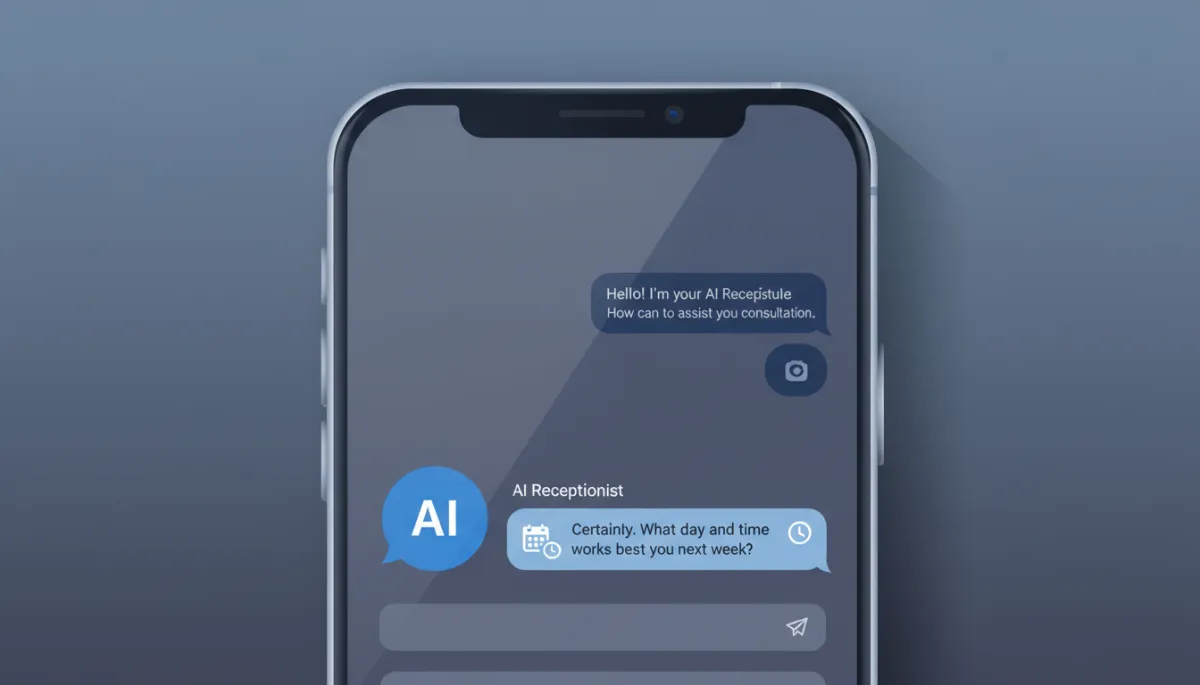
Modern AI receptionists use natural language, making interactions feel effortless for busy customers.
This shift—from rigid phone trees to natural conversation—is one of the biggest differences in today’s AI Receptionist vs traditional receptionist debate. As Gartner’s insights on AI in customer service suggest, customers increasingly care less about whether they’re talking to a human or a machine, and more about whether their issue is solved quickly, kindly, and correctly. If the AI can do that at 10 p.m. on a Saturday, many will happily accept the trade-off.
📌 Key Takeaway: For many customers, the “human touch” is less about a physical person and more about feeling heard, helped, and not rushed. A well-designed AI receptionist can deliver that experience surprisingly well.
Cost, Consistency, and Capacity: The Three C’s of Front Desk Decisions
When local business owners weigh AI Receptionist vs traditional receptionist, the conversation usually circles around three C’s: cost, consistency, and capacity. The story of Marcus and Linda brings these to life in everyday terms.
1. Cost: The Monthly Math
Linda’s salary, benefits, and occasional overtime were a real investment for Harbor Dental Studio—but one the owners felt was worth it for their patient experience. For Marcus, hiring a full-time receptionist would have meant choosing between front-desk support and a new therapy machine. An AI receptionist gave him predictable, often lower monthly costs that scaled with usage, not with hours on the clock. As Inc.’s guidance on small-business costs reminds owners, fixed payroll is one of the heaviest line items; AI can convert part of that into a flexible operating expense.
2. Consistency: Showing Up Every Time
Even the best traditional receptionist has off days. People get sick, stuck in traffic, or overwhelmed by rushes of walk-ins. AI, by contrast, shows up the same way at 8 a.m. on Monday and 11 p.m. on Friday. It doesn’t forget to log a message or mistype a phone number. That consistency matters when customers expect instant answers, a trend highlighted in Zendesk’s report on rising customer expectations. For Marcus, knowing that every call would be answered—even if just to say “Let me get some details and have the team follow up first thing in the morning”—became a quiet competitive advantage.
3. Capacity: Handling the Rush Without Cracking
On busy days, Linda could only answer one call at a time. If two lines rang, she had to choose; if three did, someone was guaranteed to hit voicemail. An AI receptionist, on the other hand, can handle multiple calls or chats simultaneously. It doesn’t get flustered when three people call during a snowstorm asking if the office is open. That extra capacity—especially during seasonal peaks—means fewer missed opportunities and fewer frustrated customers left hanging.
💡 Pro Tip: When you compare live receptionist vs AI, don’t just look at average call volume. Look at your busiest days and hours. That’s where AI’s capacity really pays off.
How to Decide: A Practical Virtual Receptionist Comparison Checklist
If you’re a local business owner standing where Marcus once stood, wondering which receptionist path to choose, it helps to turn the story into a simple checklist. Use this as a guide for your own virtual receptionist comparison:
Track your reality for two weeks. How many calls do you miss? How often does voicemail pick up? How many callers never leave a message?
Map your customer journey. Do people first reach out by phone, text, web form, or social media? An AI receptionist can often cover more of these channels than a single person at a desk.
List your FAQs. Hours, pricing, insurance, directions, parking—these are perfect tasks for AI, freeing human staff for complex questions and in-person care.
Calculate your true cost. Include salary, benefits, training, turnover, and the hidden cost of missed opportunities when no one answers.
Decide what must stay human. Maybe it’s greeting walk-ins, handling sensitive conversations, or supporting complex cases. Design your receptionist solution—human, AI, or hybrid—around that core.
As you walk through this checklist, resources like Answerly’s guide to the AI receptionist front desk of the future can help you see what’s possible beyond old-school phone trees and voicemail boxes. Combined with broader perspectives from McKinsey, Harvard Business Review, and Zendesk, you can build a front-desk strategy that fits both your budget and your brand.
From Story to Strategy: What This Means for Your Local Business
Months after Marcus installed his AI receptionist, something subtle changed on Main Street. Patients who couldn’t get through to Harbor Dental during lunch breaks started booking evening physical therapy sessions instead. Reviews mentioning “always reachable” and “easy to schedule” appeared on Blue Harbor’s Google profile. Meanwhile, Harbor Dental, after seeing the shift, decided to add AI support too—starting with after-hours coverage and call overflow during peak times. The story wasn’t about one business winning and the other losing; it was about both evolving.
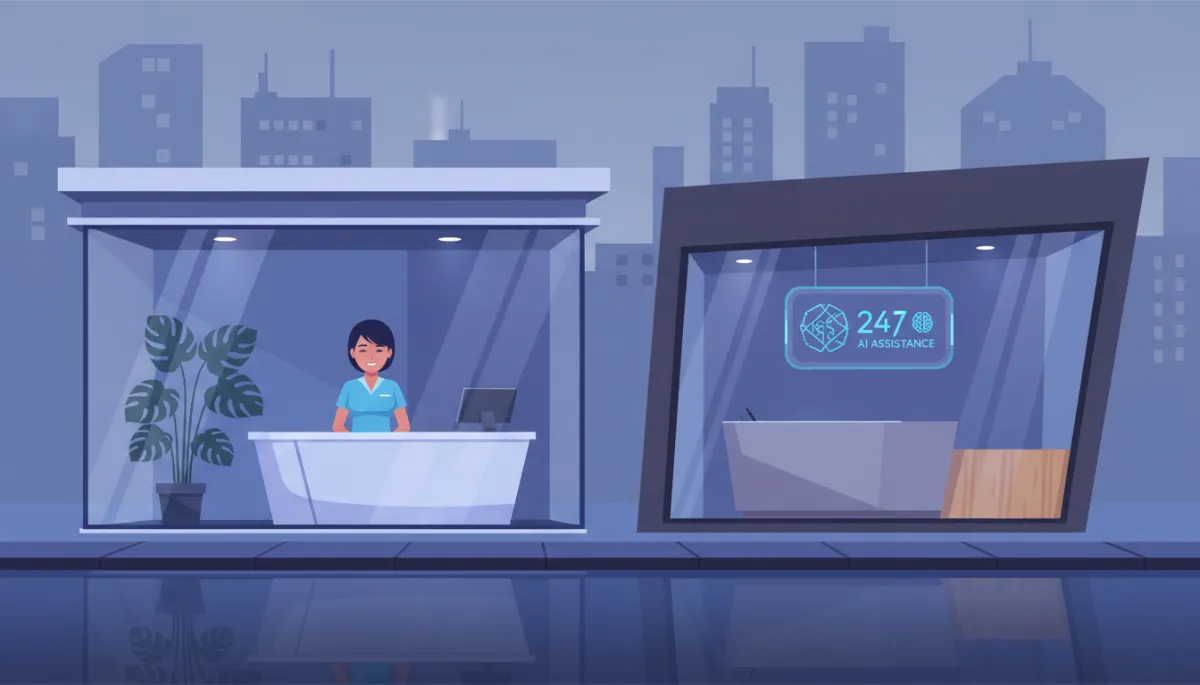
On many main streets, AI receptionists quietly reshape how local businesses serve their communities.
That’s the real heart of the AI Receptionist vs traditional receptionist conversation. It’s not a battle between cold technology and warm humans. It’s a question of how you, as a local business owner, want to design the first moments your customers spend with you—on the phone, in a chat, or at your front door. It’s about choosing the mix of tools and people that lets you show up reliably, professionally, and with a touch of personality, even when you’re short-staffed or swamped.
💬 Story Moment: One evening, Marcus watched through his front window as a patient crossed the street from Harbor Dental, phone in hand. She had just tried to call and got a busy signal. Within minutes, she was inside Blue Harbor, saying, “Your system actually answered. Can I book here instead?”
Ready to Explore Receptionist Alternatives? Start with a Conversation
If this story feels uncomfortably familiar—if you’ve ever listened to a full voicemail inbox on Monday morning and wondered how many opportunities slipped away—then it might be time to seriously consider modern receptionist alternatives. Whether you keep a beloved live receptionist, add AI as backup, or go fully virtual, you don’t have to guess what will work. You can test, measure, and refine, just like Marcus did with his notebook and his after-hours calls.
Platforms like Answerly are built specifically for this moment. They take the ideas we’ve explored here—the power of AI to handle routine calls, the importance of natural conversation, the need for small-business-friendly pricing—and turn them into a practical, ready-to-use AI receptionist. Their resources on the front desk of the future and small business automation can help you picture exactly how this could look in your own office, shop, or studio. And if you’re thinking beyond the front desk—about how to attract and convert more of the right customers in the first place—partnering with an ai marketing agency can help you connect that always-on receptionist experience with smarter campaigns, better targeting, and a stronger overall growth strategy.
Take the Next Step: Let Your Front Desk Work While You Sleep
Somewhere in your town tonight, a potential customer will look up your business, tap your number, and hope someone answers. You can leave that moment to chance—or you can design it. You’ve seen how the story plays out for Marcus, for Linda, and for the businesses lining Main Streets everywhere. Now the question is simply: how do you want your story to read a year from now?
If you’re ready to see what an AI receptionist could do for your local business—whether as a full replacement, a safety net for missed calls, or a smart partner for your existing team—take a few minutes today to explore your options. Visit https://joinanswerly.com/, learn how an AI receptionist works in real-world settings, and imagine a front desk that never has to choose between answering the phone and serving the person right in front of you.
The next time the phone rings after hours, it could be the start of a new, better chapter for your business—one where every caller is greeted, every opportunity is captured, and your front desk finally works as hard as you do.