AI Receptionist vs Answering Service: Best Choice?
AI Receptionist, Answering Service, Business Automation, Customer Support
AI Receptionist vs Answering Service: Which One Is Better for Local Businesses?
Somewhere in your town, a ringing phone is quietly deciding whether a local business grows this year—or keeps treading water. This is the story of what happens on the other end of that call, and why the choice between an AI receptionist and a traditional answering service is becoming one of the most important decisions small business owners make.
Two Missed Calls and a Lost Contract: A Familiar Local Story
Picture Jordan, who runs a small HVAC company on the edge of town. One July afternoon, while his crew was knee-deep in a complicated repair and he was stuck in traffic between job sites, his business phone lit up. Then again. Then a third time. By the time he checked his voicemail that night, the opportunity was gone—a large commercial client had moved on to a competitor who simply picked up the phone first.
That single missed call represented thousands of dollars in potential revenue. Multiply that by a year’s worth of unanswered or poorly handled calls, and you start to see why local businesses are rethinking how they manage call answering . For many, the crossroads is clear: AI Receptionist vs answering service . Both promise to make sure calls are answered. But which one actually fits the way small, local businesses work today?
💡 Pro Tip: Every missed call is a story you never get to hear—and a customer you may never meet.
What Exactly Is an AI Receptionist in 2026?
If your first thought is a clunky robot voice saying, “Press 1 for sales,” it is time to update that mental picture. By 2026, an AI answering service or AI receptionist is less like an automated menu and more like a smart, always-on front desk assistant who happens to live in the cloud. According to recent Forbes coverage of AI receptionists handling calls for small business owners and TechRadar, modern AI receptionists are powered by advanced natural language processing that understands and responds to callers in natural, conversational language, not rigid scripts.
These AI receptionists can recognize intent, handle multiple languages, and even pick up on emotional cues in a caller’s voice. They pull data from your calendar, CRM, and other tools to do more than just answer calls—they can book appointments, route urgent issues, and log detailed notes that your team can act on instantly. As highlighted in this overview of AI receptionists and the future of front desk work and in analyses like why “boring AI” is becoming the backbone of reliable customer service , they are quickly becoming the digital nerve center of the modern small business.
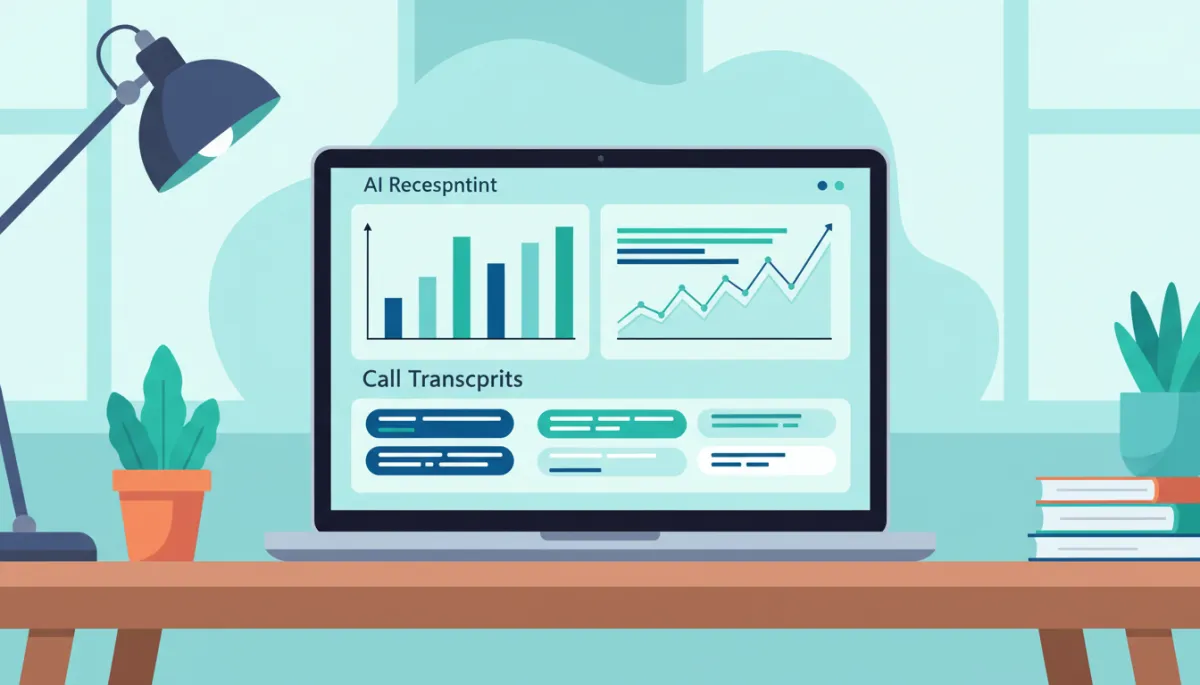
AI receptionists turn every call into structured data your team can actually use.
Core Features of Modern AI Receptionists
24/7 availability: No breaks, no holidays, no “I stepped away from my desk for a second.”
Natural conversation: Advanced NLP allows callers to speak normally rather than “talking like a robot to a robot.”
Business automation: Automatic appointment booking, intake, FAQs, and routing, all integrated with your systems.
Personalization: Recognizes repeat callers, remembers preferences, and tailors responses accordingly.
Analytics and insights: Generates reports on call volume, missed opportunities, common questions, and more.
In other words, an AI receptionist is not just another phone tool—it is a customer support solution and an automation engine wrapped into one, designed to help local businesses punch above their weight.
What About Traditional Answering Services?
Traditional answering services have been the go-to safety net for decades. When your office is closed or your staff is overwhelmed, calls roll over to a team of human agents, usually sitting in a call center somewhere else. They answer with your business name, take messages, sometimes schedule appointments, and pass information back to you via email, text, or a portal. For many local businesses, this felt like the only realistic way to avoid sending callers straight to voicemail.
By 2026, answering services have evolved too. Industry reports show a strong shift toward hybrid models—combining live agents with AI tools for faster triage and better analytics. Many now offer omnichannel support, handling not just phone calls but also chat, SMS, and email. Still, at their core, they rely heavily on people, which brings its own strengths and limitations. Deep-dive comparisons such as AI receptionist vs. traditional answering services in 2026 underline how these people-powered models stack up against newer AI-driven options.

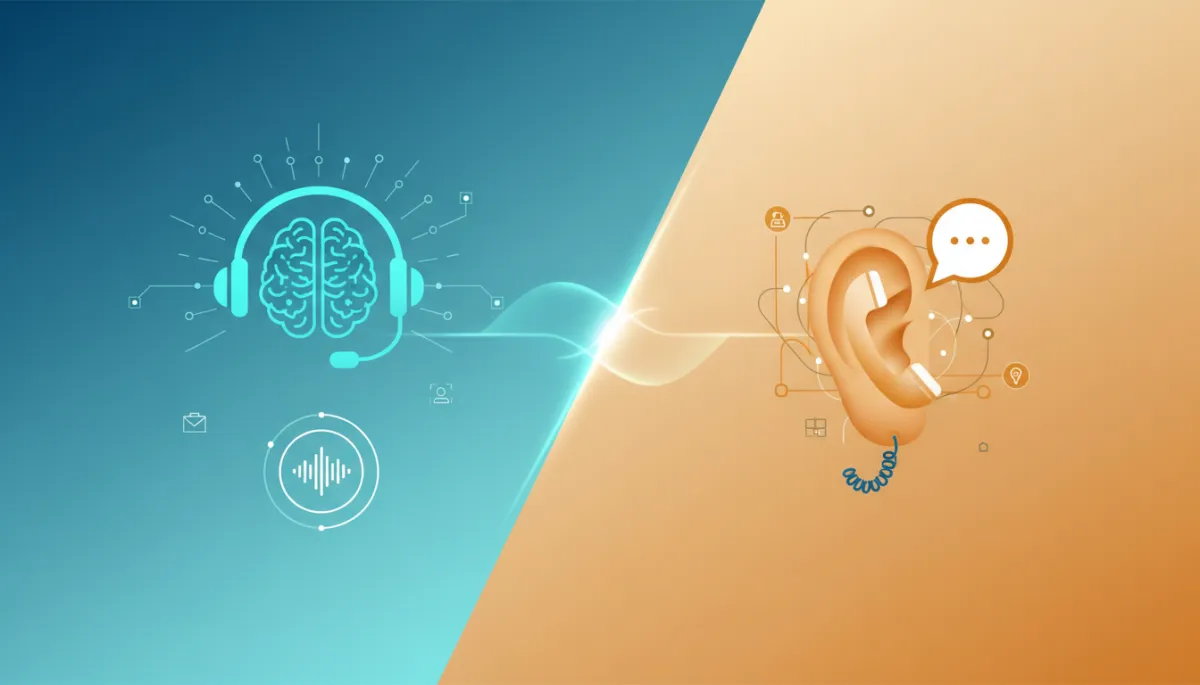
Human-based answering services bring empathy but also higher recurring costs and limits.
Strengths of Traditional Answering Services
Human warmth: A real person can offer empathy, reassurance, and nuanced understanding in sensitive situations.
Complex call handling: Human agents can better navigate unusual or multi-layered questions that fall outside a script.
Familiar model: Many business owners understand how answering services work and feel comfortable with the concept.
Limitations of Traditional Answering Services
Higher costs: Live agents require salaries, benefits, and management, which you pay for through per-minute or per-call fees.
Limited scalability: Spikes in call volume can mean long hold times or dropped calls, because people can only answer so fast.
Inconsistent quality: Different agents may handle calls differently, leading to uneven customer experiences.
Limited automation: Many services still function like glorified message takers instead of true business automation tools.
AI Receptionist vs Answering Service: A Side-by-Side Comparison
Aspect AI Receptionist / AI Answering Service Traditional Answering Service Availability 24/7/365 with no downtime or staffing gaps 24/7 possible but depends on staffing and costs Cost Typically lower, predictable subscription-style pricing Higher, often per-minute or per-call billing Scalability Easily handles call spikes without extra cost Limited by agent availability and higher surge costs Personal Touch Growingly natural and personalized, but still AI-driven High—real humans offering empathy and nuance Business Automation Deep integration with calendars, CRM, and workflows Limited; often manual data entry after calls Analytics Detailed call data, trends, and insights built in Basic reporting, often limited to call counts and durations
When you view AI Receptionist vs answering service side by side, a pattern emerges: traditional answering services excel in human warmth, while AI receptionists dominate in scalability, cost, and automation. For local businesses trying to do more with less, that difference matters.
How AI Receptionists Power Business Automation for Local Teams
Think back to Jordan, our HVAC owner. Before he adopted an AI receptionist, every call followed the same exhausting pattern: answer, gather details, check the calendar, scribble notes, and hope nothing got lost between job sites. It was reactive, stressful, and fragile. One bad day of missed calls could throw off his entire month.
With an AI receptionist in place, that story changed. Now, when a new customer calls, the AI greets them by business name, asks smart questions based on his intake process, checks real-time availability, and books appointments on the spot. It tags calls as “emergency,” “maintenance,” or “quote request,” and sends structured summaries to his team. What used to be chaos is now a predictable, automated flow of leads and jobs. This is what AI receptionist–driven small business automation looks like in practice.
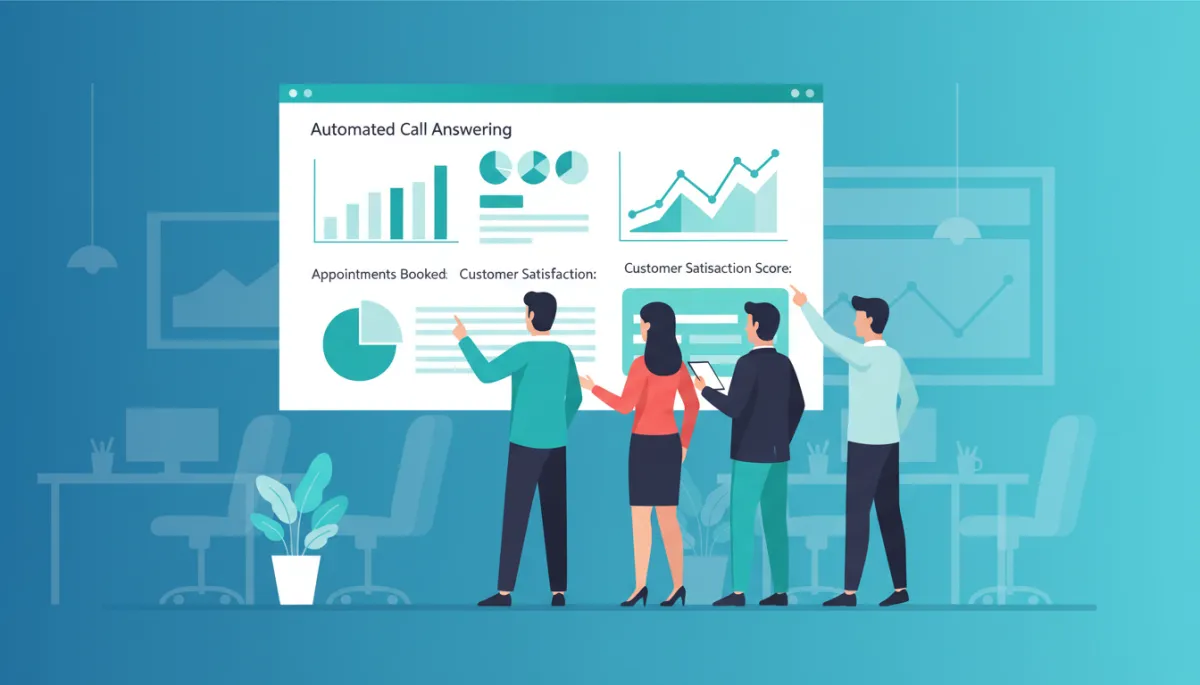
Automation turns your phone from a stress source into a predictable growth channel.
Real-World Automation Wins You Can Feel
No more back-and-forth for scheduling: The AI receptionist checks availability and confirms appointments instantly, even after hours.
Automatic lead qualification: Calls are tagged by urgency and service type, so your team knows what to prioritize each morning.
Instant records: Every call becomes a searchable record with key details, instead of scattered sticky notes or half-remembered voicemails.
Smarter staffing: Analytics reveal peak call times, helping you schedule field staff and in-office support more effectively.
📌 Key Takeaway: An AI receptionist is more than an answering service alternative ; it is a business automation engine that quietly optimizes your day from the first ring to the last.
Customer Support Solutions That Match Modern Expectations
Customers in 2026 are different from customers a decade ago. They are used to same-day deliveries, instant messages, and on-demand everything. When they call your business, they are not just hoping someone picks up—they expect a fast, helpful, and personalized experience. Research shows that AI-powered customer service can provide 24/7 support, quick answers, and personalized interactions at scale, a trend that continues to accelerate across industries like home services, healthcare, and professional services. As thought leaders note in discussions of why boring AI is the key to better customer service , it is the consistent, reliable automation behind the scenes that keeps modern customers satisfied.
In this new reality, voicemail feels like a dead end. Long hold times feel like disrespect. And a confusing phone tree is a fast track to a negative review. The businesses that thrive are the ones that treat call answering as a core part of their customer support strategy, not an afterthought. AI receptionists, especially those designed specifically for local businesses, are built to meet this expectation head-on by combining speed, consistency, and personalization.
The Human Factor: Where Answering Services Still Shine
Of course, there are moments when a human voice matters deeply. A law firm taking a late-night call from a panicked client. A medical practice handling a sensitive question. A funeral home comforting a grieving family. In these cases, the emotional intelligence and empathy of a live agent can be invaluable. Traditional answering services have long been the bridge in these emotionally charged moments, and for some industries, they will likely remain part of the mix for years to come.
This is why many modern solutions are moving toward hybrid models—letting AI handle the majority of routine calls and routing only the most complex or sensitive conversations to trained human agents. This hybrid approach acknowledges a simple truth: the best customer support solutions do not ask you to choose between humans and AI; they orchestrate both intelligently.
Cost, Control, and Consistency: The Business Owner’s Lens
When local business owners compare AI Receptionist vs answering service , they are really weighing three things: cost, control, and consistency. An AI receptionist typically offers more predictable pricing and the ability to scale without surprise fees. It lets you control scripts, flows, and integrations so the experience truly feels like your business, not a generic call center. And because AI behaves according to clear rules, the level of service is consistent from call to call and day to day.
Traditional answering services, on the other hand, can feel like a black box. You trust that agents are doing their best, but you may not have detailed visibility into what is actually said on calls, how leads are handled, or how consistently your brand voice is represented. For many owners, that lack of control and insight becomes a growing concern as their business scales. Articles like AI vs. traditional receptionist comparisons highlight how AI tools are closing the gap on “human feel” while far surpassing traditional options in data, control, and automation.

When you see the numbers side by side, automation often tells a compelling story.
Which One Is Better for Your Local Business?
So, when you strip away the buzzwords and look at the day-to-day reality, which is better: an AI receptionist or a traditional answering service? The honest answer depends on your business, your customers, and your goals—but some patterns are emerging clearly in 2026.
If you run a local service business —like HVAC, plumbing, landscaping, dental, or auto repair—where speed, scheduling, and lead capture are critical, an AI receptionist or AI answering service is often the stronger choice. It automates the repetitive work, keeps costs predictable, and makes sure you never miss a high-intent call again.
If you operate in a highly sensitive field —such as certain areas of healthcare or legal services—where emotional nuance is paramount, a hybrid model or a carefully chosen answering service may still play an important role, especially for after-hours emergencies.
If your priority is business automation and growth , and you want your phone system to work hand in hand with your CRM, booking tools, and marketing efforts, an AI receptionist is usually the clear winner.
💬 Story in a Sentence: The businesses that outgrow their competitors are usually the ones that stop treating call answering as a chore—and start treating it as a strategic, automated customer support solution.
Turning Your Next Call into Your Next Customer
Somewhere, right now, another Jordan is driving between jobs, unaware that a potential dream client will call in the next hour. The difference between landing that client and losing them may come down to whether an AI receptionist is ready to pick up, respond intelligently, and book the appointment before a competitor even has time to listen to their voicemail. That is the quiet power of choosing the right answering service alternative.
If you are curious how an AI receptionist could work at your own front desk—how it might greet your callers, automate your workflows, and support your team—now is the perfect time to explore it. Dive deeper into what the front desk of the future looks like, or compare AI vs traditional receptionists in more detail to see where your business fits on the spectrum.
Ready to See What AI Can Do for Your Phones?
Your phones do not have to be a source of stress, missed revenue, or uncertainty. With the right AI receptionist in place, they can become a reliable, automated engine for growth—capturing more leads, delighting more customers, and giving your team the freedom to focus on the work only humans can do. That is the real promise behind the debate of AI Receptionist vs answering service : not just answering calls, but transforming what those calls mean for your business.
If you are ready to turn your next ring into your next opportunity, take the next step. Visit Answerly’s homepage to explore AI receptionist and call answering solutions built specifically for growing local businesses. Your story with missed calls does not have to end the way it started—and Answerly is ready to help you write a better ending.